RH: From the Antique Rose Emporium in Brenam I make my West to one of the most beautiful cities in Texas, San Antonio. I’m going to make a house call on Kathy Hoskins. Now, she wants me to make a cage for her pet iguanas. This ought to be interesting. Kathy’s sons Patrick and Evan have enough pet iguanas to outfit a zoo, five in all. So are you pretty comfortable with iguanas, Evan? Are you nervous around them at all or is it just like dogs and cats?
EH: They’re nicer.
RH: They’re nicer? Why’s that? How are they nicer?
EH: Well, they don’t bite. Like this one, doesn’t bite.
RH: Well, with that reassurance I decide to stick around and draw up a plan for the cage. We’re going to build five frames which will be covered with heavy duty screen. These screens are used for the top, bottom, sides and one end of the cage. On the other end we’ll install a hinge door complete with latch. Then Patrick explains to me that we’ll need not one cage but two. Two cages, not just one big one. Why is that?
PH: Well, because we need to separate compartments for the males, because the males fight during mating season.
RH: Oh, so you’ve got to separate them. So, two cages it is. What I’d like to do is to start with a drawing like this and then from that figure out what I call a cut list. This is all going to be 2 x 2 as we said. So, these are the quantities down here and the lengths. So we need 18 pieces 48 inches long and so forth. So, we all ready to cut?
EH: Well, we need our safety glasses.
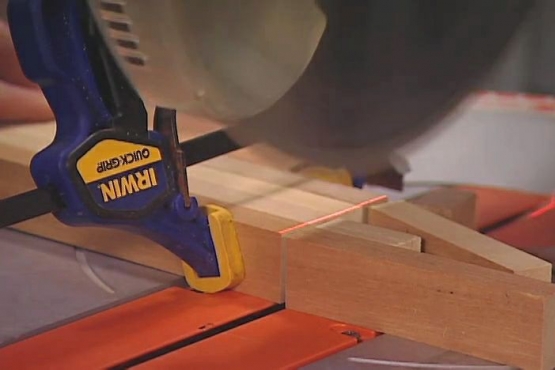
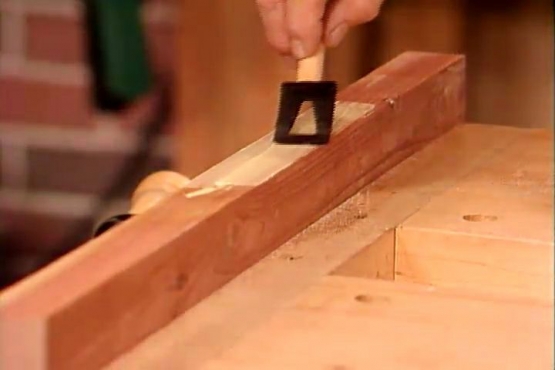
RH: Safety glasses. Excellent. Very good Evan. With our cut list as a guide and plenty of wood to cut, each of the boys gets a turn on the saw. Excellent. We’re going to be assembling the five frames by joining together the 2 x 2s using simple butt joints. We’ve stacked all of our wood over here, put all the same sizes together and you notice on the ends we’ve just numbered the lengths. That’s going to make it easy to find the ones that we need. So, now guys it’s time to start doing some assembly. Now we’re going to both glue and screw these together. This is called a butt joint that we’re using. This is a polyester glue. It’s water proof, very, very strong, great for anything that might get some moisture on it. After gluing each joint we drill pilot holes and drive in screws. And out. Okay. Push really good. Go ahead. Now we put together all of our frame panels, top, bottom, front back and one end. The other end is going to be a door and we’re going to construct that a little bit differently because I want it a little stronger. We’re going to use something called a lap joint and this is the way it’s going to work. To creat the lap joints we’re going to cut notches on the ends of each 2 x 2. These will then be overlapped, glued and screwed together. Ben uses my Japanese hand saw to cut half way through the 2 x 2, then Patrick rips along the grain and down the end until he meets Ben’s cut. We check to make sure the pieces form a flush joint. Then glue and screw them together. That’s it. That’s the door.
KH: Wonderful!
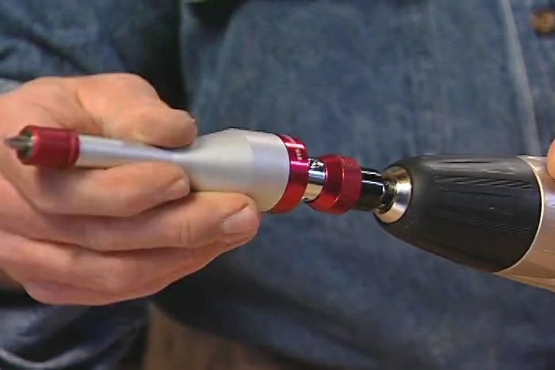
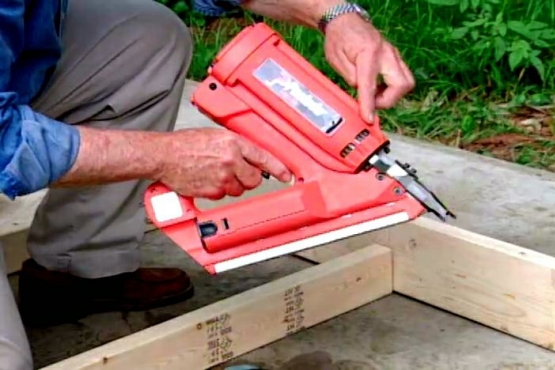
RH: This is the first frame that we built and now it’s time to put some screen on this because otherwise those iguanas could just run all over the place. All right. This is hardware cloth with a vinyl coating on it. It’s really simple to put this down. I want to make sure edges are straight here. Okay. Evan, your job is to make sure that this edge is straight up here. Okay. I’ll start and then I’m going to hand the stapler over to you guys. We’ll drive in staples about every four inches right where the wires cross keeping the screen as taught as possible as we move along. While the boys finish stapling I follow behind with a hammer driving the staples all the way in. Patrick uses metal cutting snips to remove any screen that’s left overhanging. Well, we got all the screen in our frames so now we can begin to assemble these panels. This is the front, this is the bottom. I’m going to align these and then I’m going to hold them in position temporarily with this clamp. We attach the sides, top and bottom together with screws. With a team this size the job goes very quickly and soon we’re ready to hang the door. All right we’re getting close. Here’s our door. If somebody can grab two clamps. Let’s get this fixed. Put this right in here. This is the hinge that we’re going to use. We’re going to place it right here. Half of it on the frame, half of it on the door. Now, I’ve got a special drill bit just for drilling hinges. It fits right in here. It drills a hole right in the center of the hinge hole just like that. And so we close the door on our first iguana cage. Watch. Okay, there’s our door. The latch works.
KH: That’s great!
RH: Now, we agreed we’re going to build two of these right?
PH: Yeah.
BH: Yeah.
EH: Yeah.
RH: So, let’s take a lunch break, build the second one and then we’ll see how the new residents like it.
KH: I’m sure they’ll be thrilled, that’s great.
RH: All right. Let’s eat. After lunch we assembled the second cage. When we’re finished we give it the live in test. Crossing our fingers that the occupants will be as proud of their home as we are. Well, when we give it one final touch they will be. Now this is an oil drip pan that I got at an automotive supply store. We trimmed it down a little bit and that’s going to make it a lot easier to keep this cage clean.
KH: Okay, great.
RH: And one thing I’d suggest you consider and that is maybe putting on a coat of polyurethane.
KH: Okay.
RH: The one important thing though is that this should cure for at least 48 hours before you put the animals back in.
KH: Okay.
RH: Thanks for having me over. This was a great House Call. I never thought I’d have a chance to build a home for iguanas. You guys were wonderful.
KH: Thank you and thanks for your guidance and expertise.
RH: You’re very welcome. I’ll come back some day and see how big they’ve got. Although they’re pretty big right now. Well, even as the iguanas grow their home will still be roomy. You know these animals may not be as warm and fuzzy as a new puppy but to this family they’re every bit as loving.