RON HAZELTON:
Now, I don't know how things work around your place, but here, we get a very important visit once a week. Yep, Tuesday is garbage pickup day. When that truck pulls away, I can almost feel a weight lifting from my shoulders. That's because for six days, our trash has been piling up and piling up. What I need is a place to store it that's outdoors, out of sight and out of reach of the little critters who regard it as a tempting meal.
So today, I'm building an outside trash enclosure that's convenient, good looking and tamper-proof. Now come on over here and let me show you what I have in mind. I'm going to start with a base frame like this made out of pressure-treated lumber. And then I'll add some decking on top of that.
We'll put on some side frames, a back frame and a front rail — that will pretty much give us the structure. And then some side walls or skins and a back and a front, the doors and the lid.
So, let's start by building this base frame. Since the base is going to be in contact with the ground, I'm going to make it out of pressure-treated lumber. I've cut all the pieces for my base here and it's time to hook everything together.
Everything seems to fit, so let's get these out of the way for the time being. I'm going to start by putting this end piece on. These holes that I'm drilling right now are called clearance or shank holes. It just allows these screws to go through a little more quickly and not to bite in that first piece of wood.
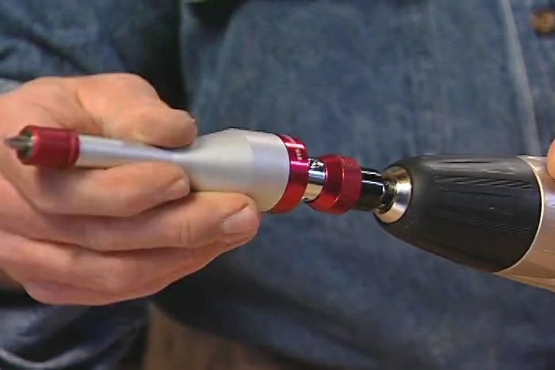
This is a hammer drill and it's really nice for driving in long screws. Okay. I've got my outer frame done now. So let's see how these fit right here. I don't mind if they're snug. I kind of like that. [HAMMERING, DRILLING SOUNDS]
Almost there. Rotate this one more time. Now there's our base frame. That's what we had over here on the computer. Now our next step, I'm going to be adding some decking right on top. The decking will be cut to length from inch-and-a-quarter-thick pressure-treated planks.
I'm going to make this flush on the ends and flush on the side. Now I'm not drilling shank or clearance holes for these screws because they're, they're fairly short. The wood is soft, they’re going in quite well.
To allow for drainage, I'm going to put an eighth-of-an-inch gap between the boards, a 16-penny nail makes a perfect spacer. The final plank will have to be trimmed to fit.
Three-and five-eighths ought to do it. So let's just go ahead and rip this down. Well, there's our deck. As a matter of fact, it looks just like it does over here on the computer. So here's what we're going to do next. We're going to add these two side frames right here. Again, I'm going to screw these pieces together.
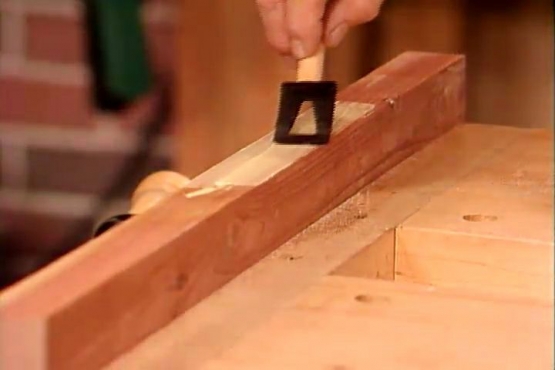
So I think as an added precaution, this is going to be outside. I'm going to put a little glue on. This is a polyurethane glue, very good for out — exterior projects. Put this in here. Now this is what urethane glue does when it dries. It kind of expands, kind of foams and it will push out of a joint.
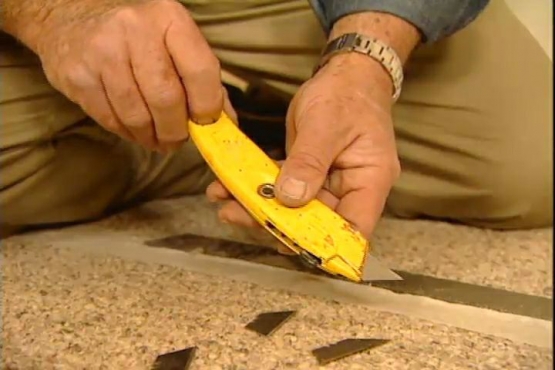
So no problem though. If you just take a sharp knife, you can just trim this right off and I'm going to do this all the way around here. Wow, side frame number one and I'm just going to repeat the process for the other one. Okay, now it's time for me to add the back frame. Here we go — two sides and one back.
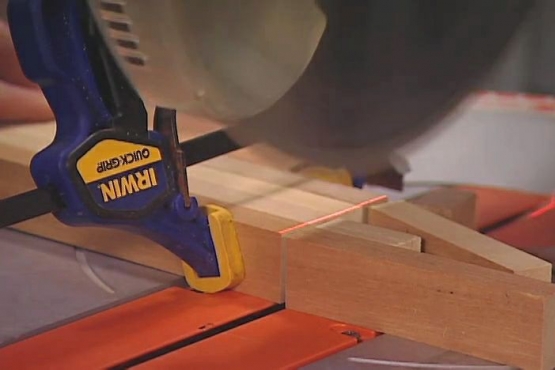
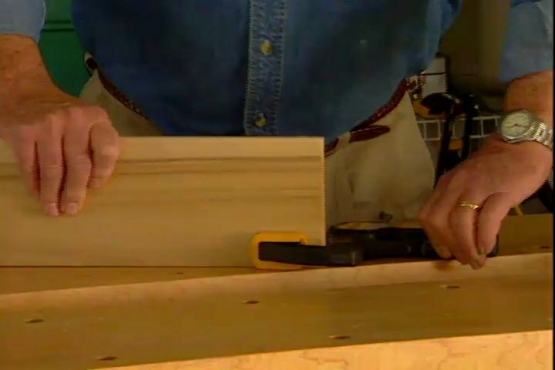
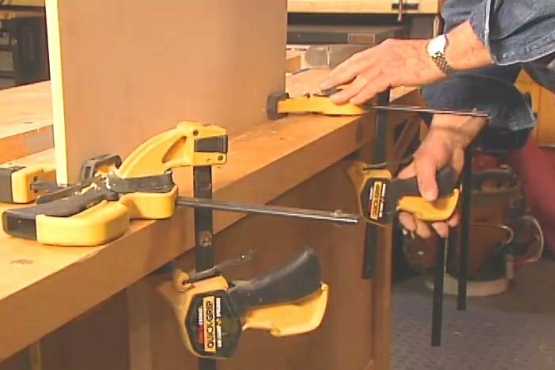
Now it's time to attach the frames to the base. I find it easier to clamp them in place first, then secure them with rust-resistant screws.
Now you can see this is beginning to take shape now. This is my back section here. We screw this first to the deck and then into the side frames. We screw this first to the deck and then into the side frames.
Now this part right here in the front is going to be open but we are going to need a brace up here to tie these two corners together. With the frame complete, I'm now ready to apply the paneling that will enclose it. So let's start putting up this, this tongue-and-groove.
Again, I'm going to — I'm just going to put these up temporarily and just take a pencil and just draw one line. Now I'll take the panels down and trim each one to length by cutting to the line I've just drawn.
This is construction adhesive and since this could move, expand and contract over time, I'm going to give myself an extra insurance here by just putting a bead up here.
Let's just set this first board in place. Well there are our sides and back. All right, we're moving right along, side walls are on, back walls are on. I want to move on to making the lid and the doors. And I'm going to make that up using that same tongue-and-groove wood.
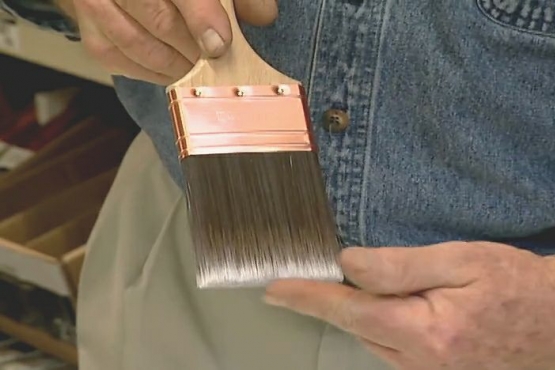
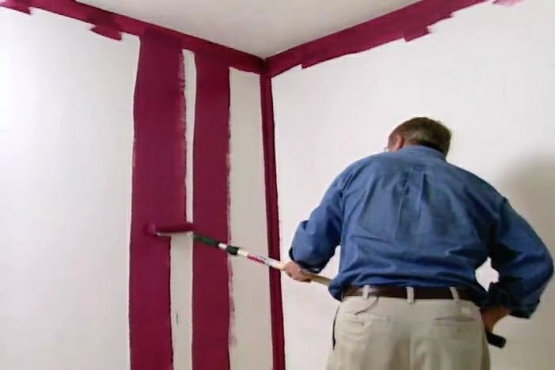
The boards for the lid and doors are slipped together and held in place with battens that are screwed into the back. The doors also get diagonal braces to keep them from sagging. With everything assembled, it's time for a coat of primer and paint.
While it's drying, I move outside to prepare the ground. First by digging out about four inches of soil, then compacting the surface with a tamper. Next, I lay in some landscape fabric that will prevent weed growth, yet allow drainage. On top of that, goes several inches of gravel.
[MUSIC]
Well, we're just about there. All that's left is to attach the hardware. Well, I think that turned out pretty well. Certainly easy to use, blends in with the house and I don't think those critters are going to be able to open that lid.