ACT I RON-VO:
HERE ON GEORGIA’S STONE MOUNTAIN, ENORMOUS SCULPTED IMAGES OF JEFFERSON DAVIS, ROBERT E. LEE AND STONEWALL JACKSON GAZE TOWARD ATLANTA.
WHILE THESE CIVIL WAR HEROES WITNESSED ITS DESTRUCTION IN 1864, ATLANTA HAS DONE NOTHING BUT BLOSSOM EVER SINCE.
FROM THE INVENTION OF COCA COLA HERE IN 1886…TO HOSTING THE SUMMER OLYMPICS IN 1996… ATLANTA CONTINUES TO GROW.
YET IN SPITE OF URBAN GROWTH, ATLANTA IS ALSO KNOWN AS “THE CITY OF TREES,” AND THOSE TREES ATTRACT A HUGE VARIETY OF BIRDS…AND BIRDWATCHERS. ONE OF THE YOUNGEST HAS GOT TO BE 6-YEAR-OLD JOHN KING JR.
JOHN HOPES TO HAVE HIS BACKYARD DESIGNATED AS AN OFFICIAL BIRD SANCTUARY BY THE AUDUBON SOCIETY. HE’S ALREADY LEARNED A GREAT DEAL ABOUT LOCAL BIRDS FROM GEORGANN SCHMALZ, THE PRESIDENT OF THE ATLANTA CHAPTER.
TODAY, I’M HELPING JOHN AND HIS PARENTS, JOHN AND BECKY, ATTRACT EVEN MORE FEATHERED FRIENDS TO THEIR HOME BY CREATING A BACKYARD BIRD SANCTUARY.
Georgann:
The main idea with bird sanctuaries is to add functional things and diversify what you’ve got.
Ron:
Now when you say functional things, you mean places where they can eat, where they can take a bath?
Georgann:
Mm-hm, yeah, different levels of habitat, different types of trees, deciduous leaves, evergreen leaves, different thicknesses. So that when a bird lands here, it feels right to them. So they’ll either stay here for the winter because there’s shelter and food. Or they’ll, when they’re migrating through, there’s good food in the canopy, or they might want to nest here because there are holes in trees or boxes up, or fruit that they can feed their young, or lots of insects.
Ron:
So it’s not just things that we build, but the vegetation that we put out here as well.
Georgann:
Right.
Ron:
So we have our shopping list. And John you’re going to build, you and I together right? We’re going to build some more of these? I got a bunch of tools, right? But I don't know much about birds so I’ll tell you a little bit about the tools, you tell me more about birds, we’ll both be winners on this, alright?
RON-VO:
ALONG WITH JOHN’S SISTER AUGUSTA AND THE REST OF THE GROUP, WE CLIMB ABOARD MY MOTORHOME FOR A SHOPPING SPREE. WE’RE STOPPING AT THE HOME IMPROVEMENT CENTER TO BUY A VARIETY OF BIRD FEEDERS AND BATHS AS WELL AS LUMBER FOR THE BIRD HOUSES AND SPECIAL PLANTS THAT SHOULD DRAW BIRDS TO THE YARD.
Chip:
This right here is the um, Inkberry holly, this is a native shrub. It produces black berries, they’re kind of black to purple in the summer and the birds just love it.
Ron:
So this is breakfast John.
Chip:
This is another great plant. This is the mista lantana and it’s a great bird attractant.
Ron:
What is it that attracts the birds to that? Does it have a berry?
Chip:
I believe it’s more the color and it does have berries--
Georgann:
It’ll have a berry in the fall but it’s a nice flat surface, great for butterflies too.
RON-VO:
NEXT, WE HEAD INDOORS WHERE THERE’S SEEMINGLY A HOUSE, BATH OR FEEDER FOR EVERYTHING FROM CHICKADEES TO TURKEY VULTURES.
WITH OUR CARTS FULL OF PLANTS, HOUSES AND FEEDERS WE HEAD BACK TO THE HOUSE TO BEGIN BUILDING OUR SANCTUARY.
Ron:
All right so we’ve got the potential then to attract a number of birds here.
Georgann:
Right, house finch right above us that’s listening to all this, he’s waiting for these to go to seed.
Ron:
The word is out.
Georgann:
Yeah, they’re already gathering.
Ron:
The feed is on at the King residence. Ok.
RON-VO:
THOSE BIRDS SOUND HUNGRY, SO WE’D BETTER GET CRACKIN’. GEORGANN SAYS GOODBYE; SHE’LL BE BACK LATER TO CHECK ON OUR PROGRESS.
Ron:
All right well I’m going to go to work.
Georgann:
Okay good luck.
RON-VO:
JOHN AND BECKY GRAB SOME SHOVELS AND BEGIN REMOVING A PATCH OF LIRIOPIE – AN ATTRACTIVE SHRUB BUT NOT VERY APPEALING TO BIRDS. WE’LL REPLACE IT WITH MINARDA, A PLANT WITH TUBE-LIKE FLOWERS THAT ARE A FAVORITE OF HUMMINGBIRDS. MEANWHILE, JOHN JR. AND I START ANOTHER PROJECT.
Ron:
John this is the bird box or bird house that Georgann brought over and this is the one that we’re going to make right here okay, so the first thing we got to do is cut out these pieces so that’s what we’re kind of set up here for. So let’s start with a back, I’ll measure this one, thirteen and three-quarters now, you want to measure down from the end there thirteen and three-quarters?
Ron:
You can take that away John, now, this is a square so lay that, so see this edge right here, that goes along the edge of the board. Good man.
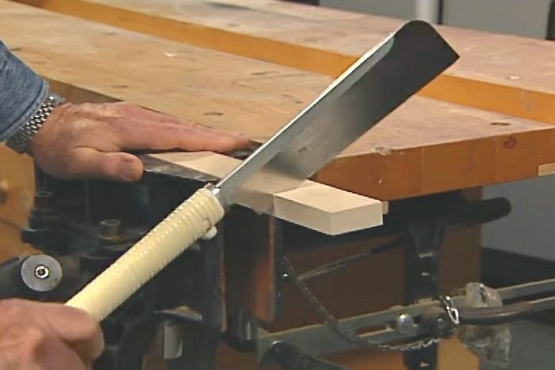
The saw that we’re going to use to cut this with is a Japanese Handsaw. Now Japanese handsaws only cut when you pull them toward you, so this is when it’s cutting and this is how you use it. I’m just going to start it for you here, put it on the line and you just pull this back towards you like I’m doing here.
(SOT: SAW)
Ron:
Nice long strokes. Nice and easy now. There you go.
Ron:
Okay, so this is the back right here--
John Jr.:
OK. The back--
Ron:
That's the side--
John Jr.:
The side.
Ron:
So we'll start by nailing the side to the back.
John Jr.:
Okay.
Ron:
Alright. That sound right?
John Jr.:
I like the wooden hammer.
Ron:
That’s my favorite hammer right there.
RON-VO:
NOW BEFORE JOHN GETS TO HAMMERING THERE’S ACTUALLY SOMETHING I CAN DO TO MAKE IT EASIER FOR HIM TO DRIVE IN THE NAILS.
TIP GRAPHIC (TIP GRAPHIC SOUND EFFECT)
Ron:
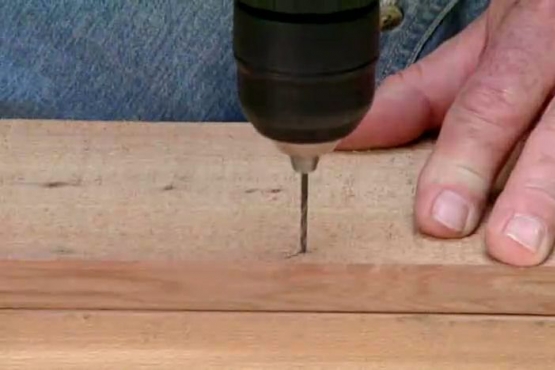
Now we often think about drilling pilot holes when we’re putting in a screw. A pilot hole is a small hole that allows the screw to go in more easily. But there are also times when it makes sense to drill a pilot hole for nails. For example, if you’re building a project like this with your kids, it makes it a lot easier for them if you’ll take a small drill, make a hole first…
(SOT: DRILL)
…and then start the nail for them...
(SOT: HAMMER)
…Let them finish it up.
(SOT: HAMMER)
The nail goes in a lot more easily and probably won’t bend.
MUSIC
(SOT: HAMMERING)
Ron:
Ouch, ouch, ouch, ouch!
(SOT: HAMMERING)
(SOT: DRILLING)
RON-VO
JUST AS JOHN JUNIOR GETS ROLLING…(add thunder or lightning crack effect)
John Jr.:
It lightning’d!
Ron:
We are going to be cut short today. It’s the second day in a row that we’ve had a pretty serious thunderstorm coming in, in the afternoon. So we’re going to stop and pick this up in the morning.
RON:
WITH A DOWNPOUR ONLY SECONDS AWAY, SOUND ENGINEER VINCE NUCCIO CAN’T WORK FAST ENOUGH TO GET MY MIC OFF, BUT WE WON’T BE DETERRED FROM FINISHING THIS PROJECT.
TEASE RON-VO (TEASE):
COMING UP…
Becky:
You know that stuff I was hacking away at?
RON – VO:
ON DAY TWO OF OUR PROJECT, HOME VIDEO CAPTURES BEHIND THE SCENES EXCITEMENT.
Becky:
It was poison ivy.
Ron:
For more great home improvement ideas, visit me at lowes.com/housecalls.
COMMERCIAL BREAK
ACT II RON-VO:
WELL, THE STORM CLOUDS HAVE CLEARED OVER ATLANTA, SO I’M BACK AT THE HOME OF THE JOHN AND BECKY KING FAMILY TO HELP BUILD A BACKYARD BIRD SANCTUARY.
JOHN AND BECKY HAVE TRADED IN THEIR SHOVELS FOR A PORTABLE ROTOTILLER. THEY’RE PREPPING THE SOIL TO PLANT MINARDA – A FLOWERING SHRUB THAT HUMMINGBIRDS JUST CAN’T RESIST.
John Jr.:
Come on, Ron!
MEANTIME, JOHN JUNIOR AND I ARE ABOUT TO COMPLETE THE CONSTRUCTION ON OUR FIRST BIRDHOUSE.
Ron:
Alright; should we do it?
John Jr.:
Yeah. I think I know what to do!
(SOT: SAW)
RON-VO:
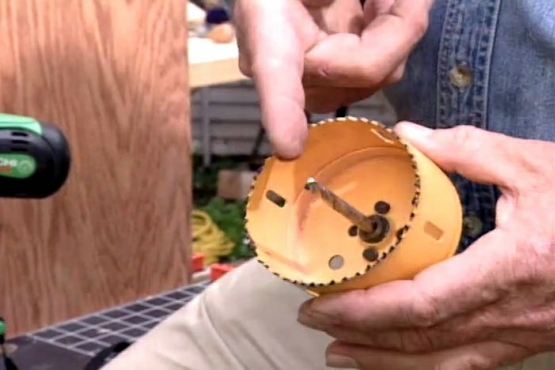
AFTER A BRIEF LESSON, JOHN USES A HOLE SAW TO BORE AN ENTRANCE TO THE BIRD HOUSE.
John Jr.:
Doh dee doh!
Ron:
What do you think--
John Jr.:
We got a hole.
Ron:
Well is that the right size?
John Jr.:
Perfect size.
Ron:
Okay, should we nail that on?
John Jr.:
Sure--
Ron:
Let's do that, let's do that, okay.
John Jr.:
I'm the best nailer.
Ron:
You are, you are--
John Jr.:
I can nail anything. I need my special hammer.
RON – VO:
WHO SAYS HOME IMPROVEMENT DOESN’T BUILD SELF-CONFIDENCE? I DRILL A PILOT HOLE AND JOHN HAMMERS IN NAILS, ATTACHING THE FRONT PANEL ONTO THE REST OF OUR BIRDHOUSE.
(SOT: HAMMER)
Ron:
By golly, John, you’ve done it! We just need a roof now, huh?
RON:
WHILE JOHN AND I FINISH UP ON THE ROOF, JOHN SENIOR AND BECKY HAVE TURNED TO POST HOLE DIGGERS, AND BEGIN PLANTING SHAMROCK HOLLY AND BLACK EYED SUSANS, BOTH SPECIFICALLY SELECTED FOR THEIR APPEAL TO THE LOCAL BIRD POPULATION.
Ron:
Let's see what these guys have been doing over here--
Becky:
Oh wow, John that is great--
John Sr.:
Ah, John, great job!
Ron:
You've been doing a lot of hole digging here--
Becky:
You did a great job--
Ron:
While John and I have been doing fine carpentry work over there.
Becky:
Yeah, this looks like it--
Ron:
Is it nice?
John Sr.:
Good job John--
Becky:
Yes, John, so where are we going to put it?
John Jr.:
Uh, right up there.
RON-VO:
WITH A BOOST FROM A STEP LADDER, JOHN SCREWS THE BIRDHOUSE TO THE TREE…
Ron:
Push push push push…
…THEN FILLS IT WITH WOOD SHAVINGS SOLD SPECIFICALLY AS NESTING MATERIAL FOR SMALLER BIRDS SUCH AS CHICKADEE.
Ron:
And how are you going to know there's a chickadee in here?
John Jr.:
Um, they usually are down at, chickadees, well nut hatches could be in here ‘cause, they could be in here because they could, they walk on trees too and they could go inside.
Ron:
Okay, so, but you'll just watch for them huh?
John Jr.:
Uh-huh--
RON – VO:
BIRDHOUSE NUMBER TWO, WHICH WE PURCHASED IN KIT FORM ON OUR SHOPPING TRIP, WILL BE ATTACHED TO A POST. IT’S DESIGNED TO FIT AROUND THIS STAKE WHICH JOHN DRIVES IN WITH A TWO-POUND SLEDGE. OUR POST IS OPEN ON ONE SIDE AND TAPERED AT THE BOTTOM. THIS ALLOWS US SLIDE IT OVER THE STAKE AND DRIVE IT INTO THE GROUND.
OUR KIT ALSO COMES WITH THIS COVER PANEL WHICH JOHN NAILS INTO PLACE.
Ron:
See that hole right there?
John Jr.:
Uh-huh.
Ron:
We’re going to put that right in there.
RON-VO:
THE TOP HALF OF THE POST SIMPLY SCREWS INTO A PRE-DRILLED HOLE ON THE BOTTOM SECTION.
Ron:
This is not a good idea to have all the seeds down here on the ground. What’s the problem?
John Jr.:
The birds could walk in their food and they could grow fungus and bacteria.
Ron:
Okay, because there’s like, droppings that come down here too, and they come down and eat. So we don’t want to do that.
John Jr.:
Mm-hm.
Ron:
And also this attracts rats?
John Jr.:
Rats and rodents.
Ron:
So we’re going to, we’re going to take this grass out and put in some mulch. And I want to first of all cut a nice circle here, so that it looks really neat.
RON-VO:
TO ACCOMPLISH THIS, I TIE ONE END OF A STRING TO THE POST…LET IT OUT ABOUT TWO FEET…THEN TIE ANOTHER LOOP AND INSERT A CONTAINER OF CHALK INSIDE.
Ron:
Pull the string tight and kind of give it a little squeeze like this?
John Jr.:
Mm-hm.
Ron:
And work your way around the post, okay?
John Jr.:
Okay.
MUSIC
Ron:
Okay?
John Jr.:
Okay.
Ron:
That’s a circle, right?
John Jr.:
Mm-hm.
RON – VO:
WELL, IT’S TIME TO DO SOME DIGGING. WE DIG OUT ABOUT 3 INCHES, THEN COVER THE AREA WITH PINE BARK. THIS HELPS KEEP THE SURFACE BENEATH THE FEEDER MORE SANITARY. AS SEEDS AND DROPPINGS HIT THE BARK, THEY’LL FILTER THROUGH TO THE GROUND AND DECOMPOSE.
WITH OUR PINE BARK DOWN, WE’RE ADDING A BAFFLE TO KEEP SQUIRRELS FROM CLIMBING UP TO THE FEEDER.
Ron:
Oh, this is my favorite hammer? OK, I’ll…there you go. Thank you John, this is my favorite hammer.
RON – VO:
WITH THE BAFFLE IN PLACE, WE ATTACH THE BIRDHOUSE TO THE TOP OF THE POST WITH SCREWS.
John Sr.:
Thanks, John.
RON – VO:
NEXT, IT’S TIME TO FILL UP THE PANTRY.
Ron:
How long will that last?
Becky:
A day.
Ron:
Come on.
John Sr.:
If that.
John Jr.:
Yeah. One time it was in one day.
Ron:
Well you either have a lot of birds around here, or a few obese birds. That’s a lot of food!
John Sr.:
Ok, John here’s the topping off.
Ron:
Alright John. Yay.
John Sr.:
Alright.
Ron:
Alright come on you guys, soups on.
John Sr.:
Absolutely.
MUSIC
RON – VO:
WE’RE DOWN TO A FEW FINISHING TOUCHES SUCH AS ATTACHING THE HUMMINGBIRD FEEDER TO THE DECK RAILING. SO WITH A LITTLE SPARE TIME, WE BREAK OUT THE HOME VIDEO CAMERA AND CAPTURE SOME “BEHIND THE SCENES” MOMENTS ON HOUSECALLS.
Ron:
See the camera? Look at the camera.
Ron:
Oh, you’re doing higher than me!
Becky:
Here you go, honey.
Becky:
I’m exhausted.
Nate (off-camera):
Did you have any idea you were going to be doing this much?
John Sr. (off-camera):
No, I had no idea. We thought it was a turn-key situation.
Nate (off-camera):
Like, putting up a couple of birdhouses?
John Sr. (off-camera):
Right, right. Watch, and say, ‘Oh, great, Ron. We love our new birdhouses!’
Daughter:
Mommy, give me some gloves.
Ron:
Aw, man! I don’t believe I did that.
Becky:
Do you know that stuff I was hacking away at? Do you know what that was that I was wrapping around my arms?
Georgann:
Have you ever heard ‘leaves of three, leave it be?’
Ron:
I looked at it, and I said to myself, that’s… be sure to get it right side up. But I did exactly the opposite.
Becky:
It was poison ivy.
Ron:
Well, I have to say that I’ve learned a lot on this project.
Becky:
You saw me stuffing it in, wrapping it around…
Georgann:
Stuffed it in that brown bag.
Ron:
I didn’t realize that you could attract birds to your yard depending on what kinds of feeders you put up, what kind of plants you put up. That’s kind of exciting.
Ron:
Alright guys let’s take a look at what we got done today. Starting with?
John Jr.:
The hummingbirds.
Ron:
The hummingbirds and that’s up here close to the house where you can see them real easily. Now down here John…
Ron:
We’ve got the…
John Jr.:
Suet feeder.
Ron:
Suet feeder and this would be for what kind of birds?
John Jr.:
Woodpeckers.
Ron:
Now over here we’ve got some plants that we’ve put in; what are these called?
John Jr.:
Um shamrock holly.
Ron:
Shamrock holly they produce a berry. For all kinds of birds?
Becky:
Right cardinals love ‘em.
Ron:
And what do we have in here?
John Jr.:
Uh safflower.
Ron:
Safflower seeds.
John Jr.:
Every, squirrels don’t like it but every kind of bird does.
Ron:
Squirrels don’t like it all the birds do but we got our squirrel thing up here anyway our squirrel baffle, all right?
Ron:
And here’s our gazebo huh?
Becky:
Oh, yeah.
Ron:
This is for, for everybody? Everybody can feed from this.
John Sr.:
Absolutely. Ron this is a virtual bird cafeteria. A little bit for everybody I think.
Ron:
Hey Georgann how are ya?
Georgann:
Hi folks I’m doing fine. This is fantastic.
Ron:
Yeah?
Georgann:
Yes this is great.
Ron:
We did a good job?
Georgann:
Oh you’ve added a little bit of everything. I think you’ve raised your yard to another level of habitat.
Ron:
We have created a sanctuary of sorts?
Georgann:
Enough to be certified as a sanctuary.
Ron:
Really? You’re an official sanctuary now?
Georgann:
An official sanctuary.
Ron:
By the Audubon Society?
John Jr.:
The Atlanta Audubon Society. Wildlife Sanctuary…
Ron:
I think we ought to go hang this up, what do you say? Let’s go over here.
RON – VO:
WITH A LITTLE HELP FROM YOUR HOME IMPROVEMENT CENTER, OR THE AUDUBON SOCIETY, YOU CAN GET IDEAS FOR CUSTOMIZING YOUR OWN BACKYARD BIRD SANCTUARY. AND I CAN’T THINK OF A BETTER BACKYARD IMPROVEMENT PROJECT THAN ONE THAT PROVIDES COLOR, SONG, AND HOURS OF ENJOYMENT WHILE GIVING URBAN WILDLIFE A HELPING HAND.