Building a Fireplace – Learn How to Build Your Own Fireplace Mantel
How to Build a Wood Fireplace Mantle and Surround with Classic Design and Details.
Enhance your existing fireplace surround, removing flat trim and adding a three-dimensional wooden mantel and pilasters/columns to make it the centerpiece. Build components from stock lumber and molding using a table saw and circular saw. Attach them with a nail gun and construction adhesive. Spackle the nail holes, sand, and then paint to match the rest of your home's decore.
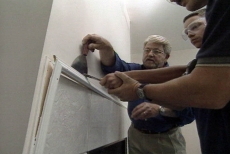
Remove Flat Trim with a Pry Bar and Putty Knife
Pry off existing trim with a small pry bar and wide putty knife. Position the putty knife between the wall and the pry bar and lever against it to avoid gouging the plaster or drywall behind it.
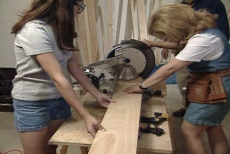
Cut Vertical and Horizontal Surround Components from Standard Dimension Pine
Use a circular saw and table saw to cut standard dimension pine lumber to lengths and widths required for the horizontal portion and sides (pilasters or columns) of the fireplace surround. Cut the mantel and molding as well.
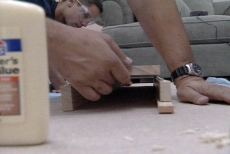
Assemble and Position the Pieces That Form the Wooden Surround
Use glue and a pneumatic nail gun to assemble the vertical and horizontal components of the wooden surround. Locate wall studs and mark positions with a bar level to ensure they're plumb and horizontal. Nail up the horizontal member first.
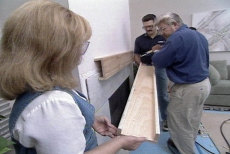
Glue the Edges of the Surround's Sides That Touch Tile
Apply construction adhesive to the inner edges of the two surround sides (pilasters) that rest on top of tile. Ensure the sides are plumb and resting squarely on the floor and then attach with a nail gun.
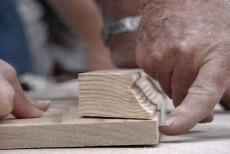
Combine a Pine One-by-ten and Decorative Molding for the Mantel
Miter the corners of decorative molding and glue and nail them to a pine one-by-ten for the mantel. Set the molding in from the edge of the board to create an additional level in the decorative wood profile.
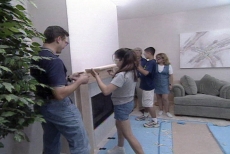
Position and Secure the Mantel with Construction Adhesive and Nails
Apply dollops of construction adhesive to the upper surfaces of the horizontal and side components of the surround. Position the mantel on top, level it, and secure it with the nail gun.
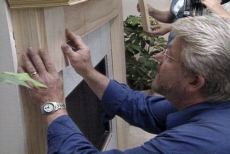
Position and Secure Plinth Blocks at the Top and Bottom of the Pilasters
Use the pneumatic nail gun to attach a decorative plinth block to the top, bottom, and sides of the pilasters (the vertical sides of the surround) butted against the bottom of the mantel and resting on the floor tile.
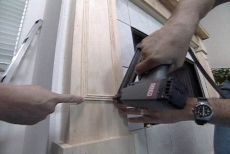
Miter Decorative Molding for the Face of the Surround
Miter the corners of stock molding to decorate the fronts of both pilasters/columns and the horizontal component of the surround. Attach it with a brad nailer.
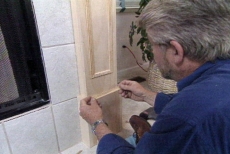
Add Molding at Joints between Plinth Blocks and the Surround
Use the brad nailer to attach decorative molding to the exposed edges of the plinth blocks where they meet the surround. Miter the ends where they will meet at a corner.
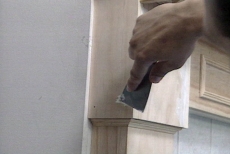
Spackle Nail Holes and Imperfections Prior to Painting
Fill nail holes and any other imperfections in the wood with interior-grade spackling compound. Allow it to dry, sand it, and then paint the mantel and surround to match the rest of the room's décor.
Related Tips
Blog Articles
Maximize Your Yield with DIY Netting for Strawberry Beds
Keep your strawberries safe from pests with our DIY strawberry cage netting solution. Learn how to create sturdy frames and find the best netting for your strawberry plants.
Change It Up: Swapping Out Your Light Switch Plates
Tired of boring light switch covers? Upgrade your home decor with this simple guide on replacing light switch plates and make a statement in every room.
Revamp Your Outdoor Space: How To Stencil A Concrete Patio
Learn how to create a stunning patterned concrete patio with our easy-to-follow instructions for stenciling. Upgrade your outdoor space in no time.