Search all of RonHazelton.com:
[Log In]
How to Build a Slide-out Pantry
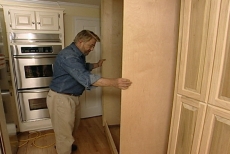
Learn how to build a slide-out pantry that can sit right next to your refrigerator.
View the video.

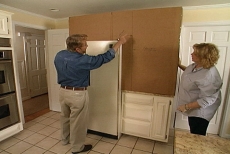
After replacing their refrigerator with a larger model, home owners must remodel some cabinetry and lose some countertop in their kitchen to accommodate the new appliance. Consequently, they decide to build a slide-out pantry that will maximize use of the tight space while keeping the contents easy to see and easy to reach. Removing several units of the existing cabinetry and an expensive piece of granite countertop will precede building a new refrigerator enclosure and construction of the new slide-out pantry from 4 by 8 sheets of birch-veneer plywood using pocket-hole joinery.


Next Step >>

Step by Step Instructions and Video
Step
3
Remove the Cabinets and Countertops
Remove the doors and drawers from the cabinets, after unscrewing hinges and drawer glides. For granite or other stone countertops, you'll need to loosen the silicon adhesive underneath. To do this, heat a large putty knife with a propane torch and slide the heated knife beneath the countertop. If your countertop is laminated or built of other materials, you may need to remove screws underneath and cut through any caulking along the backsplash to prevent tearing of the wallboard or wallpaper during removal. Remove the countertop from the base cabinet. Put the granite aside for future use, after protecting the polished surface from damage. Locate the nails (or screws) that hold the cabinets to the wall by gently running a small magnet over the nailing strip. The magnet will adhere to each fastener through the layers of paint and indicate their positions. Use a hammer and a small pry bar to expose each nail and pull it out (or remove the screws). The cabinet units also attach to each other, so carefully plan the order in which each unit should have its supporting nails removed and be detached from its neighbor. Use a reciprocating saw to cut the nails that hold each unit to the adjacent cabinet, sliding the blade between the cabinet units. Remove the units one at a time, possibly supporting them temporarily so that they do not fall. Repeat these steps as needed to remove all of the cabinets.
Step
5
Attach the Sides of the Pantry
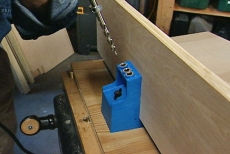
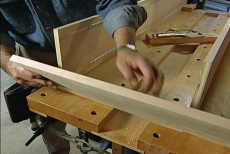
Use pocket-hole joinery to attach the pantry's side panels to the top and bottom panels. This method uses screws and pre-drilled holes bored into the wood at a very steep angle, almost parallel to the surface of the wood. We are using a purchased kit that supplies several tools to facilitate the process. Begin by attaching the special step drill bit, with its pilot end and adjustable stop-collar, to your power drill. Adjust the stop-collar to control how deeply the bit will penetrate the wood. Set the wood panel on its edge in the jig that clamps and holds it in a vertical position while you insert the drill into the drilling jig that holds the bit at an angle. These kits are available from your home-improvement store. Pre-drill the required holes at the locations marked on the panels. Apply glue to the edges and butt the edges together. Use a joining clamp to hold the corners in position. You can use a specially designed pocket-hole clamp to pull and hold the pieces tightly together. One end of the clamp actually fits into one of the pockets that you have just drilled, while the other end presses flat against the other panel's surface. Once everything has been glued and clamped together, drive in the screws.
Step
8
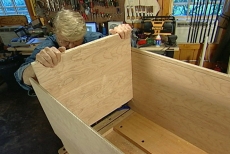
Construct the Slide-out Shelving Units
Cut panels of the appropriate dimensions for the two slide-out shelving units.  Install a dado blade on the table saw and cut two dados/grooves on the interior surfaces -- one on the left and one on the right. Pre-drill them for pocket-hole joints at the corners. Set shelf-standards (manufactured metal tracks for the movable pins that will hold up the small adjustable shelves) into the grooves, tapping them gently with a mallet to seat them in the groove. Screw them in place. Apply glue to set for the first unit, then clamp the sides, top, and bottom together and secure them with pocket screws. Set the fixed center shelf in place. Use joining clamps to position it, and then secure it with screws. Repeat this step to assemble a second shelving unit.
Step
9
Install Glides and Attach Pull-out Shelves
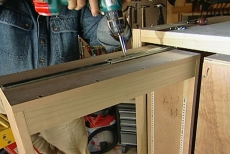
Attach two full-extension glides to a small wooden platform -- one platform for each slide-out pantry unit. Position the first platform, hardware side downward, on the bottom of the pantry cabinet. Drive screws through the glide/slide rail into the floor of the cabinet. Repeat for the second shelving unit. Position and install an additional slide/glide mechanism for each sliding shelf on the top panel of the pantry cabinet. Attach the glide to the underside of the cabinet's top panel first. Set the shelf in place and attach the glide to the top of the sliding shelf. You will have one top glide attached to each shelving unit. Drive screws through the bottom of the shelf into its platform at the bottom of the cabinet. Install the second sliding shelf in the same manner.
Step
10
Add Decorative Face Panels
Cut and route four decorative face panels for the exterior of the sliding shelves using a table router. Cut bevels/tapers along all four edges in proportions to match the rest of the kitchen cabinetry. Cut and route groove in the four frame rails that will hold the panels in mortise and tenon joints. Insert the decorative panel into the grooves in the frame/rails. Do not add glue to the beveled panel; it must be free to expand and contract with changes in temperature and humidity. Use glue on the mortise and tenon joints at the corners of the frames. Clamp the assembled decorative panel and frames while the unit dries. Repeat the steps above for each of the remaining decorative panels. Nail the finished panels to the fronts of each slide-out shelving unit using a pneumatic nail gun.
Step
11
Build the Refrigerator Enclosure
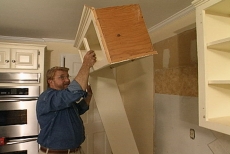
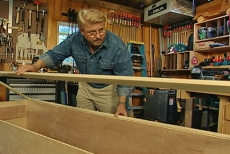
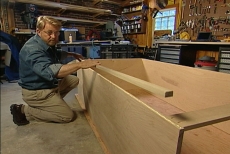
Start on the refrigerator enclosure, cutting the necessary panels to the correct dimensions from birch plywood and applying glue to the edges. The enclosure is essentially an open-bottomed box into which the refrigerator will roll. Note, however, that you will need two narrow supports at the bottom of the enclosure until you move it into position and screw it to the wall. The support at the back of the enclosure (where it abuts the wall) can be permanent if space allows, but you must remove the brace at the front of the enclosure prior to rolling the refrigerator into position. Drill pocket-holes and drive screws for the permanent joints that hold the panels together. Hold them in position with pocket-hole clamps and joint clamps to position the work during assembly. Let the glue dry. Attach a solid wood face frame to conceal the front edge of the plywood using glue and a pneumatic nail gun.


Home | Contact Us | Advertising & Product Placement | Media Inquiries | Privacy | Terms of Use | Pages Index
2009 Ron Hazelton Productions - Do It Yourself Home Improvement - All Rights Reserved
Website Design by Jonathan Preston and Mark Godwin
Page generated in 0.776 seconds